Wednesday, December 18, 2013

Hermeneutical Philosophies for Interpreting Narrative Literature Part 5 - Early Readers Perception

Early Readers Perception

Another objective standard by which we can interpret the Lucan narrative is by reading how the initial readers understood his message. This is called early readers perception. While this does not provide an objective standard, if we can show that the readers of antiquity universally adopted a certain principle of hermeneutics, it makes any variation extremely unlikely. These witnesses were closer to the original recipients of the letters and thus more able to distinguish nuances, customs, and culture more readily than modern readers. This does not necessarily indicate a proper understanding of tongues, but a more relevant understanding of the cultural phenomenon (Kraeger 2010, 46). Many of the apostolic fathers were mere decades removed from those who wrote the scriptures, and established the paradigms we are trying to verify. The church fathers were also the result of the paradigms the gospel writers were establishing; hence their doctrine is likely the result of normative behavior on the part of the first generation church. A brief review of the early church's doctrine shows that they believed the miraculous work of the Holy Spirit to be normative and the baptism of the Holy Spirit to be a post-conversion experience. If the first Christians experienced the miraculous as methodological and normative it strongly suggests the Gospel writers intended it as such.

Miracles

The miracles discussed by the early church were not symbolic or representative but used as a sign to establish divine approval. Some theologians view the miracles as ceremonial, and rather marking dispensation in God's approach. F.F. Bruce suggests that the speaking of tongues on Pentecost was ceremonial rather than practical. Tongues were not designed as a method of bridging the language gaps between Christians and foreigners, but as a one-time declaration in preparation for the worldwide proclamation of the gospel (Bruce 1955, 53). This conflicts sharply with scant
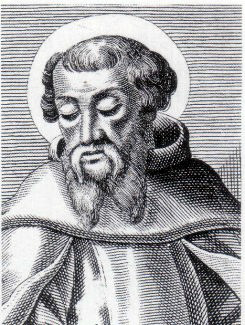
references to the miraculous amongst the early church. Irenaeus says “many brethren in the church” speak in tongues. Irenaeus does not use the term speaking in tongues, but rather “through the Spirit speak all kinds of languages” (Schaff 2001, 892). These gifts are not equated with evangelism, gentile or otherwise, but the edification of the church. For Ireneaus, the gifts had a purpose that extended past the apostolic age. Other authors, such as Hippolytus, explicitly state that miracles should follow, such as: exorcisms, tongues, serpent handling, and healings. The fathers indicate that the tongues-gift also served an important evangelistic purpose (Busenitz 2006, 66). So fundamental was this practice, that Tertullian speaks of groups who mimic the Christian practice of using miracles to evangelize for their heresy (Reid 1987, 385). In relation to miracles, the early church firmly believed that the gifts of the Spirit were used to practically accomplish the work of evangelism. This is a result of a normative understanding of the Lucan narrative, which many directly quote.
Signs

As shown above, the original readers of the Lucan texts interpreted the miraculous as normative, and used these miracles as a practical tool of evangelism. Yet this view is not shared by all; Bruce believes events, such as Pentecost, were not practical, but rather God showing His pleasure with the gentile introduction into God's fold (Bruce 24, 1990), whereas Menzies concludes Luke and Acts consistently portray the gift of the Spirit as a prophetic endowment which enables its recipient to fulfill a divinely ordained task (Menzies 1994, 273). The latter is the view that dominated in earliest Christianity and is best preserved in Luke-Acts (Turner 148, 2003). Miracles are multipurpose in nature but the advantage that elucidates our area of interest is to display the approval of God. Miracles are a violation of the natural laws. When a task that only God can undertake is completed in unison with a human it testifies that the human enjoys divine approval. Miracles were used to prove the Gospel as the ultimate apologetic (Ruthven 2008, 18). The early church recognized and utilized this form of apologetics so successfully heretical groups mimicked it.

Miracles hold that same capacity for a testimony of divine approval today as they held then. On this point Dunn disagrees; Dunn claims Jesus never used miracles to prove the uniqueness of His identity. Dunn believes that the apologist is faced with the dilemma of differentiating the miraculous claims of Christ with that of the pagan (Dunn 1975, 74). It is apparent that Dunn misses the apologetic nature of miracles and their contemporary use. Firstly because Jesus does, in fact, use miracles to prove His unique identity. When John the Baptist appealed for Christ to emphatically confirm His unique identity as Messiah Jesus did not use self-affirming claims but depended entirely on a testimony of miracles (Matt 11:4-5). Jesus and His followers repeatedly appealed to the use of miracles to confirm divine approval (John 10:25, 38, 14:11-12, 1 Cor 15:2-8). The Book of Acts constantly speaks of miracles in conjunction with evangelism (Acts 5:12-16, 13:9-12, 16:25-34). By the principle of repetition we can easily establish that miracles can and were used as a method of apologetics by several biblical authors and that Jesus used miracles to establish His uniqueness.

 The early church adopted the approach of using miracles as a form of evangelism. Dunn rejects the normative use of miracles, thus would also doubt their apologetical advantage. Where Dunn fails in equating the miraculous claimants of Christians versus the pagan claimants is that generally the pagan is just that, a claimant. In Dunn's view the miraculous is not a persistent theme of the Christian experience, so all we have is what the pagan has, ancient stories of supernatural, and our apologetic abilities remain the same. But this hypothesis is only valid if miracles have ended. Yet there is nothing within scriptures to suggest that is the case. In fact using the interpreting principles of the principle of repetition and early reader perception we can safely say that Luke intended holy phenomena to follow the Christian experience. Thus miracles can still be used with the apologetic flair adopted by Jesus, the apostles, and the early church.  

God Love You -- Rev. Sheen


Part 6 - Baptism in the Holy Spirit


Bibliography


Kraeger, Shane M., Toward a Mediating Understanding of Tongues: A Historical and Exegetical Examination of Early Literature, Eleutheria: Vol. 1: Iss. 1, Article 5., 2010.

Bruce, F.F., Luke's Presentation of the Spirit in Acts, Criswell Theological Review, Buxton, Derbyshire, 1990.

Schaff, Philip, Ed. Rev. Alexander Roberts, James Donaldson, The Apostolic Fathers with Justin Martyr and Irenaeus, Wm. B. Eerdmans Publishing Company, Grand Rapids, MI, 2001.

Busenitz, Nathan, The Gift of Tongues: Comparing the Church Fathers with Contemporary Pentecostalism, TMSJ, 17/1, Spring, 2006.

Reid, Patrick, Readings in Western Religious Thought: The ancient world, Paulist Press, Mahwah, NJ, 1987.

Bruce, F.F., Luke's Presentation of the Spirit in Acts, Criswell Theological Review, Buxton, Derbyshire, 1990.

Menzies, Robert Paul, Empowered for Witness: The Spirit in Acts, Sheffield Academic Press, Sheffield, UK, 1994.

Turner, Max, The Work of the Holy Spirit in Luke-Acts, Word & World, Volume 23, Number 2, Spring 2003.

Ruthven, Jon Mark, On the Cessation of the Charismata: The Protestant Polemic on Post-Biblical Miracles, Word & Spirit Press, Tulsa, OK, 2011.

Dunn, James D. G., Jesus and the Spirit, A Study of the Religious and Charismatic Experience of Jesus and the First Christians as Reflected in the New Testament, The Westminster Press, Philadelphia, PA, 1975.

Hermeneutical Philosophies for Interpreting Narrative Literature Part 4 - Author's Intent

Author's Intent

Principle of Repetition

        The suffix that theologians have added during this shift in hermeneutics is that the normative Christian experience can be deciphered if the author intended to do so (Fee 2003, 110), and Luke relates the importance of certain topics with the frequency of their use. The author's intent is an immutable objective fact that cannot change. At one point in history the author meant to communicate something, and even if they later recant of that statement it does not change the initial sacrosanct intent (Stein 1994, 26). While the Biblical authors have long since departed, and their original intent cannot be definitively ascertained, there are tools in the text that can highlight what theology Luke intended to be normative. The first rule we will examine is asking which events are repeated? Do we see a particular event happen more than once? Repeated events give us objective clues into the author's intent. If there were something Luke intended as a regular component of the Christian experience, it would be reasonable that Luke would reference the occurrence in relation to their popularity. A normative process would appear regularly in the first Christian history. The biblical standard for veracity is having at least two witnesses (John 8:17), thus we would not be unjustified in seeking at least two examples of a normal Christian experience.
There are a variety of reasons why we should expect repetition upon normative events: firstly, the events that are normative must be repeated. A singular event cannot be normative by definition. If Luke believed that the events are to be a regular occurrence in the life of the believer then they should make several appearances in the three decades that Acts cover. In reference to Stott's concern on Saul's conversion, which was accompanied by bright lights and an audible celestial voice (Stott 1990, 8), we can see that the events are not repeated. There are many conversions, yet none with such pomp and circumstance. If Luke intended for the reader to imagine this manner of conversion to be normative there would be hints in other accounts, but they are entirely absent. The same could be said of church administration. There is only one instance of deciding a matter by lots (Acts 1:26), hinting Luke may have intended this to be an anomaly. Lots could be deemed a typology, as it is present in Pro 16:33. Yet Luke never mentions lots again, but makes abundant references to dependency and guidance from the Holy Spirit (Acts 15:8) (Horton 1981, 52). Fee mentions some examples that pose problems of translating into the normative from Luke's writings, such as: selling all ones goods and giving to the poor, and ritual snake handling (Fee 2003, 110). Looking for repetition for these events will come up empty. In the case of snake handling there is only one instance of its occurrence. (Acts 28:3-6) These and many other singular events exemplify that Luke was likely not building a case for the normative; as no author would record a single instance of something intended to occur with regularity.
        Luke furnishes his readers with abundant examples of repeated events that can be depended upon to be normative. For example, Luke retells multiple examples of tongues being spoken. Clearly this was not intended to be an anomaly but a persistent character of the Christian life (Warrington 2008, 120). The same is true of miraculous healing. The Lucan narrative is replete with stories of supernatural healing thus showing that Luke intended them to be viewed as normative. The same is also true of preaching the Gospel, and establishing Christian communities. Doubtlessly Pentecost was a unique event, but was unique in that it launched a methodology, as opposed to a singular instance. The act of tongues resurfaces in the book of Acts, causing it to be normative. The activity of the church such as preaching, founding churches, and doing good works form a consistent role in the Acts narrative, and the activity of the Spirit in the form of tongues, prophecy, and healing are just as persistent. By applying the hermeneutical principles of seeking repetition, we can expunge from our normative practices that which prudence should disqualify, and cement the practices Luke intended to be normative.

Principle above Particulars


       There are some incidents in the Lucan narrative that the particulars of the incident are unique and not to be repeated but the 
overarching concepts of the affair are normative. This is best accomplished by reviewing events of a similar nature and noting the commonalities. For example, there are several episodes of healings in the scriptures and most are achieved through a sentient medium. In a break with tradition Luke records three occasions where the vehicle of healing was a soulless conduit (Luke 8:44, Acts 5:15, 19:12). The latter situation has been used to justify the healing virtue of religious relics (Foote 2005, 184), yet there is little in the Old or New Testament to support what became a cult of relics (Nickell 2007, 16). While the incidents are related, there are stark differences; as only in Acts 19:12 are inanimate objects intentionally used for healing. This does not follow the principle of repetition for healing through objects, so one could not willfully recreate the actions. Acts 19:12 were exceptional and not normative (Horton 1981, 322). The overarching principle is that healing does not always occur through a predictable procedure. The principles of unpredictable mediums of healing is given credence to by the principle of repetition.    


God Love You -- Rev. Sheen


Part 5 - Early Readers Perception


Bibliography

Fee, Gordon D., How to Read the Bible for All it's Worth, A Guide to Understanding the Bible, Zonderman, Grand Rapids, MI, 2003.

Stein, Robert H., Playing By the Rules, A Basic Guide to Interpreting the Bible, Baker Books, Grand Rapids, MI, 1994.

Stott, John R. W., The Spirit, The Church, and the World. The Message of Acts, Intervarsity Press, Downers Grove, IL, 1990.

Horton, Stanley M., Acts, Logion Press, Springfield, MO, 1981.

Warrington, Keith, Pentecostal Theology, A Theology of Encounter, T & T Clark, New York, NY, 2008.

Foote, G. W., & J. M. Wheeler, Crimes of Christianity, TGS Publishing, Frankston, TX, 2005

Nickell, Joe, Relics of Christ, The University Press of Kentucky, Lexington, KY, 2007.

Hermeneutical Philosophies for Interpreting Narrative Literature Part 3 - Typology

Typology

          One method of gleaning normative Christian experience from narrative sections of scripture is to seek typologies between the Old and New Testament and decipher modern parallels; yet this method presents the dangerous possibility of justifying obscure practices with loosely related narratives. Roger Stronstad notes that Luke's gospel is rife with typology; where particulars of processes and characters from the Old Testament are mirrored in the New Testament. Stronstad notes that Old Testament history provides a programmatic or paradigmatic function when it is first reported, but may develop a typological function from the vantage point of subsequent history (Stronstad 1995, 46). Essentially, if the events of Acts have an Old Testament parallel then they are likely to be programmatic for the modern Christian life. For example the Old Testament is replete with examples of the transfer of the Spirit or responsibility for ministry, such as Moses placing the Spirit on the seventy elders (Num 11:25), and the transfers of Spirit from Saul to David (1 Sam 16:13-14), or Elijah and Elisha (2 Kings 2:9-15). In an account designed to parallel Old Testament narratives, the day of Pentecost signifies the transfer of responsibility and Spirit from Christ's ministry to the disciples (Stronstad 1995, 154-155). These and many other types secure a lengthy trans-testamentary form which is a biblical paradigmatic that spans millennia. Luke's dependence on these typologies signifies his intentional use of timeless principles that, being normative for both testaments, are likely normative today.

          Discovering these typologies provide a case for the normative Christian experience, but not an objective case. The problem with using a typology is the author does not announce that they are using a typology and one could base a theology on a typology the author never intended. If one had a mind to, they could match an Old Testament narrative to a New Testament narrative and create and unjustified typology. For example, upon exiting the Ark Noah farmed grapes and became drunk (Gen 9:21), Jesus' inaugural miracle was turning water into wine (John 2:9), His crucifixion began with wine at the last supper (Luk 22:20) and ended with drinking wine on the cross (John 19:30), and the gifts expressed on the day of Pentecost was thought to be the product of being drunk on wine (Acts 2:13). In relation to typology: Noah's first activity on a newly cleansed world was wine induced drunkenness, and Jesus was a type of Noah as His last act of cleansing the world was accompanied by drinking wine. Jesus inaugurated His ministry by providing wine for drunkenness at Cana, which was a typology for the apostles who were accused of being drunk on new wine upon the inauguration of their ministry (note that Jesus claimed to bring new wine, Luke 5:38). Thus a normative Christian experience could be that one must become drunk on wine to bring cleansing, or commencing a ministry must be accompanied by heavy drinking. Of course such a proposition is ludicrous, but it does highlight the possibility of abusing typology in scripture and the potential for error. While much is to be learned by Luke's obvious use of typology, it cannot be used as an objective rule for the normative Christian experience, and thus cannot be relied upon to accurately decipher what sections of the narrative are repeatable.

God Love You -- Rev. Sheen


Part 4 - Author's Intent


  1. Stronstad, Roger, Spirit, Scripture & Theology: A Pentecostal Perspective, Asia-Pacific Theological Seminary Press, Baguio City, Philippines, 1995.


Hermeneutical Philosophies for Interpreting Narrative Literature Part 2 - Hermeneutical Philosophies

        The conflict as to the place of the miraculous in the contemporary church stems from the problem of deciphering programmatic approaches in amongst the singular events found in the Lucan narrative in lull of didactic statements relating to their continuation. The Pentecostal may be tempted to base their entire ministry approach on the first century church, but before proceeding they must seriously consider the repeatability of certain events. John Stott questions the possibility of modern relevance for holding church elections by drawing lots (Act 1:23-26), selling all our goods and treating our resources as common property (2:44-45) and conversions being accompanied by bright lights and an audible voice (Acts 9:3). Stott believes that the narrative is largely impotent unless accompanied by the didactic (Stott 1990, 8), hence the narrative needs the didactic before being appropriate for doctrine. Doctrine cannot be rooted in the narrative alone, for the narrative is too slippery, too elastic, too imprecise (Menzies 2000, 39). It may seem obvious that not all elements of the narratives are to be repeated but upon which principle do we reject some and endorse others? If a Pentecostal is to reject certain practices endorsed by the narrative, but reject others, it is not unreasonable to ask for an objective standard to decipher which earns imitation and which is relegated to a singular instance. Stott's standard provides a concrete foundation for the subjective narrative to stand upon. But in doing so, Stott demotes the narrative's genre to undependable. If the narrative needs the didactic but the didactic does not need narrative then the narrative by itself is not able to teach us anything. This means that the narrative genre is only capable of complimenting the didactic, but not capable of independent instruction. A position such as this is entirely untenable for any theologian, as the narrative genre comprises 40% of the Old Testament and 60% of the New (Stein 1994, 151). Fee notes that the principle of the Pentecostal is to fashion their church entirely after the book of Acts. Yet they routinely reject practices such as church enforced communism and snake handling, thus violating their own hermeneutical principle. One camp cannot dismiss massive portions of scriptures as secondary only to the didactic, whereas the other cannot claim to abide by all, whilst rejecting those practices sound sense deems as absurd.

         Stott succeeds in the creation of an objective hermeneutical principle, but the principle fails to treat the narrative as a genre in its own right. In doing so, Stott, and theologians like himself reject the explicitly didactic principle of finding teaching in all genres (2 Tim 3:16). Yet this theology has become increasingly untenable. Thus in Klein, Bloomberg, and Hubbard's 1993 work on hermeneutics they “rejected” the maxim of those who believe narratives without commandments are not normative (Klein 1993, 349 – 350). Yet in their 2004 edition of the same work they note that those same theologians “correctly” suffix their previous dictum that narratives without didactics may be normative if it can be proven the author intended it to be read as such (Klein 2004, 424). This transitional suffix has shown that even those who birthed this hermeneutic of didactic primacy have seen the error of their approach, but they are silent on how to decipher whether or not the author intended the narrative to be normative. Over these years a paradigm shift has occurred that has given new life to the New Testament narratives (Menzies 2000, 42). Yet while the outright rejection of the commandless narrative seems unjustified, those doing so are searching for an objective standard by which to interpret the living narrative. Pentecostals, such as Menzies and Stronstad, provide critics of the issues associated with demoting the narrative and provide evidence of Luke's aptness as a theologian. But they do not provide principles that allow us to extract the normative from the unique. This approach creates a neat and simple hermeneutic philosophy, but rejects the obvious theological intent of the narrative author. Thus, when interpreting the Lucan narrative in relation to the miraculous, we cannot merely reject Luke's theological teaching because they are without didactic, but must discover which principles allow us to extract the doctrines Luke intended to be normative to the Christian experience.

God Love You -- Rev. Sheen


Part 3 - Typology


Bibliography

Stott, John R. W., The Spirit, The Church, and the World. The Message of Acts, Intervarsity Press, Downers Grove, IL, 1990.

Menzies, William W., Robert P. Menzies, Spirit and Power Foundations of Pentecostal Experience, Zondervan Publishing House, Grand Rapids, MI, 2000.

Stein, Robert H., Playing By the Rules, A Basic Guide to Interpreting the Bible, Baker Books, Grand Rapids, MI, 1994.

Klein, William W., Craig L. Blomberg, Robert L. Hubbard, Jr., Introduction to Biblical Interpretation. Thomas Nelson, Inc. Nashville, TN, 1993.

Klein, William W., Craig L. Blomberg, Robert L. Hubbard, Jr., Introduction to Biblical Interpretation. Thomas Nelson, Inc. Nashville, TN, 2004.

Tuesday, December 17, 2013

Hermeneutical Philosophies for Interpreting Narrative Literature Part 1 - Introduction

Part 1 - Introduction


         The hermeneutics of Lucan literature is divided between those who find miraculous paradigmatic examples in the text applicable to the modern church, and those who confine the age of miracles to Luke's narrative. The interpretation of the former seeks to repeat the miracles, as retold in Acts, into modern-day methods of ministry. This interpretation is generally known as Pentecostalism. The interpretation of the latter is to repeat the success of that initial ministry in relation to bringing souls to Christ, yet achieve such aims in a manner less reliant on the miraculous and more reliant on the homiletic. This persuasion is generally known as Cessationism. Both sides enjoy a spectrum of diversity but for the sake of brevity we will confine definitions to those given above. Both sides accept the historical validity of Luke's account; the difference is the repeatability of certain aspects of the history. While expositors acknowledge that not all behaviors are to be repeated, the presence of miracles divides interpreters as to their modern relevance.
         At the heart of this issue is a hermeneutical divide on the genre of the narrative. The narrative provides an inseparable compound of the unique and the paradigmatic, yet deciphering between the two is difficult. The genre of the narrative differs from the didactic, which deals in objective commandments and emphatic statements. Some solely base their theology on the didactic and use the narrative to compliment it. This is done in dearth of hermeneutical principles that can separate the unique from the repeatable. I propose the hermeneutical approaches called the principle of repetition and early readers perception of the text. By adopting these principles we can sunder between the normative and the distinct.


          What neither side denies is that the miraculous work of the Holy Spirit is fundamental and inseparable from the work of the early church. Those who expect miracles as relating to their contemporary ministry find abundant programmatic examples in the book of Acts upon which to base their ministry. Those who deny the role of the miraculous are in the difficult position of trying to find paradigmatic ministry sans an element that was indispensable to the apostles. The apostles could not have imagined a miracleless ministry; and would have seen the empowering of the Holy Spirit as basal. Those who depend on a homiletic based ministry launch an approach foreign to the early church. Thus, if the basis of one's ministry is not constantly seeking the miraculous, then one will find little in the way of paradigmatic ministry. In fact, such a ministry will have to create an entirely new methodology that bears little resemblance to that retold by Luke. This puts the cessationist minister in the discommodious position of necessitating a new paradigm without the aid of a single biblical ecclesiastical narrative or even a didactic. The cessationist say the miraculous in Acts was not paradigmatic for contemporary ministry, but what such an approach does not answer is where the paradigm for a miracleless ministry is found, for it is certainly not within the scriptures.

God Love You -- Rev. Sheen


Part 2 - Hermeneutical Philosophies

Friday, December 13, 2013

Pelagian Theology and Thanksgiving

Pelagian theology teaches that sin need need not be a consistent trait in human life, and that we can fully live lives in accordance with the will of God.  This reminded me of celebration of Thanksgiving:


I heard a teacher say that they prohibit school celebrations of Thanksgiving because of the gruesome conflict and persecution that ensued between the Natives and Settlers. They argued that we shouldn't celebrate one moment of peace and unity when subsequent history is so thoroughly dominated by gruesome and blood soaked clashes. Thanksgiving is eclipsed by the rest of human history, and to celebrate a brief moment of respite in the otherwise unbroken line of cruelty is lopsided and disrespectful.


But it made me wonder, how can we ever have peace and equality until we realize that it is possible? For one sliver of a second the Settler and Native came together in brotherhood as a sign to all subsequent generations that peace is an achievable goal. If it was possible for just a moment then it is possible for an eternity. If we forget that such a path is possible then we will certainly never walk on it.

Much the same way our spiritual history is dominated by acts of rebellion against a Holy God who wishes to be joined in peace with all mankind. Yet for one beautiful and perfect moment God and man existed in perfect harmony in the life of Jesus Christ. Christ was all man and all God and showed us that a human life can be one of perfect holiness. Jesus defied human history and showed us that holiness and peace with God is for us all. Jesus' life reminds us that the path to God exists, and we are to walk it.


When we look at Thanksgiving it does not lessens the horrors of subsequent atrocities, but actually exacerbates their wickedness. If evil is unavoidable, and central to the human condition, then it is nothing to be reviled but merely expected. But it is only when you see how beautiful things can be, even for a moment, can you ever truly be horrified by how hateful it is when they descend. The same is true of humanity, if sin is inherent then why attempt to preach against it? For it is no more terrible that breathing. But if holiness is possible then sin becomes infinitely more vile. For then you do not sin because you are a sinner, but sin in purposeful and deliberate rejection of who God intended you to be.

To reject Thanksgiving is to reject that Brotherhood in our land is possible, and is rejecting the celebration and the emulation of unity. And to reject holiness is to reject that perfect moment when man and God came to together to show us the path to total holiness and peace with Heaven. The word Thanksgiving is the same word we use for the body and blood of Christ. So take, eat, drink, repent, and live in perpetual Thanksgiving that Christ made a way for holiness.


God Love You -- Rev. Sheen

Saturday, August 27, 2011

Is God Punishing America?


"When the men got up to leave, they looked down toward Sodom, and Abraham walked along with them to see them on their way. Then the LORD said, “Shall I hide from Abraham what I am about to do? Abraham will surely become a great and powerful nation, and all nations on earth will be blessed through him. For I have chosen him, so that he will direct his children and his household after him to keep the way of the LORD by doing what is right and just, so that the LORD will bring about for Abraham what he has promised him.”
Then the LORD said, “The outcry against Sodom and Gomorrah is so great and their sin so grievous that I will go down and see if what they have done is as bad as the outcry that has reached me. If not, I will know.”
The men turned away and went toward Sodom, but Abraham remained standing before the LORD. Then Abraham approached him and said: “Will you sweep away the righteous with the wicked? What if there are fifty righteous people in the city? Will you really sweep it away and not spare the place for the sake of the fifty righteous people in it? Far be it from you to do such a thing—to kill the righteous with the wicked, treating the righteous and the wicked alike. Far be it from you! Will not the Judge of all the earth do right?”
The LORD said, “If I find fifty righteous people in the city of Sodom, I will spare the whole place for their sake.”
Then Abraham spoke up again: “Now that I have been so bold as to speak to the Lord, though I am nothing but dust and ashes, what if the number of the righteous is five less than fifty? Will you destroy the whole city for lack of five people?”
“If I find forty-five there,” he said, “I will not destroy it.”
Once again he spoke to him, “What if only forty are found there?”
He said, “For the sake of forty, I will not do it.”
Then he said, “May the Lord not be angry, but let me speak. What if only thirty can be found there?”
He answered, “I will not do it if I find thirty there.”
Abraham said, “Now that I have been so bold as to speak to the Lord, what if only twenty can be found there?”
He said, “For the sake of twenty, I will not destroy it.”
Then he said, “May the Lord not be angry, but let me speak just once more. What if only ten can be found there?”
He answered, “For the sake of ten, I will not destroy it.”
When the LORD had finished speaking with Abraham, he left, and Abraham returned home."


Genesis 18:16-33


We love to focus on the negative aspects of American society. Abortion is rampant, divorces are rising, kids are getting into drugs, there is gang violence, corrupt politicians, pornography, murder, obscenity, blasphemy, slander and do not get me started on what people watch in movies.

When we are done lambasting society we turn to the Church. Doctrine is awful, the Bible is disregarded, clergy earn too much, this or that movement is a sign of the times, congregations are too big or too small, we do not give enough, tithing is unbiblical, we do not talk about sin, we do not show enough love and do not get me started on worship music.

It would seem that the USA is ripe for a little fire and brimstone. And every-time tornado season comes around that predictable vocal minority gleefully preach “God is judging America!” I shan't comment on the validity of this claim but I think we could all use a break from the USA painted by the aggressive pessimists. I will briefly encapsulate the America I see.

For every baby murdered there are a loving parents who worship God through tear filled eyes praising Him for the blessing of a child. There are even potential parents pleading with all they have for a baby, not a healthy baby, or a baby of their race, or even a baby from their genetic code, just a child that they can give their all to. For every divorce there are devoted spouses celebrating every wonderful day together. There are also struggling couples trying desperately to solve their problems and are often accompanied by those who went through the struggles and came out holding hands. For every kid getting into drugs there are parents willing to cut out their own heart only to save their child. Every kid in a gang has a counterpart in college, both have Grandmas praying for their souls. Every corrupt politician is disgraced only because their constituents believe morality is an essential quality in Leadership. Many young people grappling with porn have a parent or pastor who guide them from their temptation with non-judgmental love. We all ask what caused Seung-Hui Cho to murdered twenty-five people at Virginia Tech; but do we ask what caused Liviu Librescu, a holocaust survivor, to forcibly prevented Cho from entering the room by holding the door closed until most of his students escaped through the windows.  Librescu died after being shot multiple times through the door.


There are vile doctrines permeating from the Church and I know they are growing. But this is nothing new. I know many heretics but I know many people who go against the religion of their entire family in order to follow God in truth.  Some are putting down their Bibles and picking up their i-Phone but just around the corner there is a child bagging groceries to raise money for Bibles in China, there are designers who are bringing the Bible to the i-Phone, there are still people learning their favorite verses verbatim so they can turn to the Lord's promises in times of need. Affluent and impoverished alike find some obscure justification for a tightfisted approach to money but I have met the widows who go without food in order to send that extra $5 to the destitute. I know the unsung minority who hire surplus staff just so that person can have the dignity and resources to feed themselves. There are Pastors with exorbitant incomes but there are a humble few who live in trailers and pick up cans at the side of the road in order to pay rent and buy their kids a stick of gum.


God promised to save Sodom if there was a tiny population of good people, just a few, and Sodom would have been saved. Well guess what people...America is full of heroes of the faith. At times they are quiet, humble, unremarkable, or even socially unpresentable but God views their devotion. There are more than five or five thousand or even five million and they are all around. They are present and beautiful. Before we jump on the critical bandwagon remember the prayer of old that adjourns the Catholic Mass,


“Look not on our sins, but on the faith of your people.”
God Love You -- Rev. Sheen